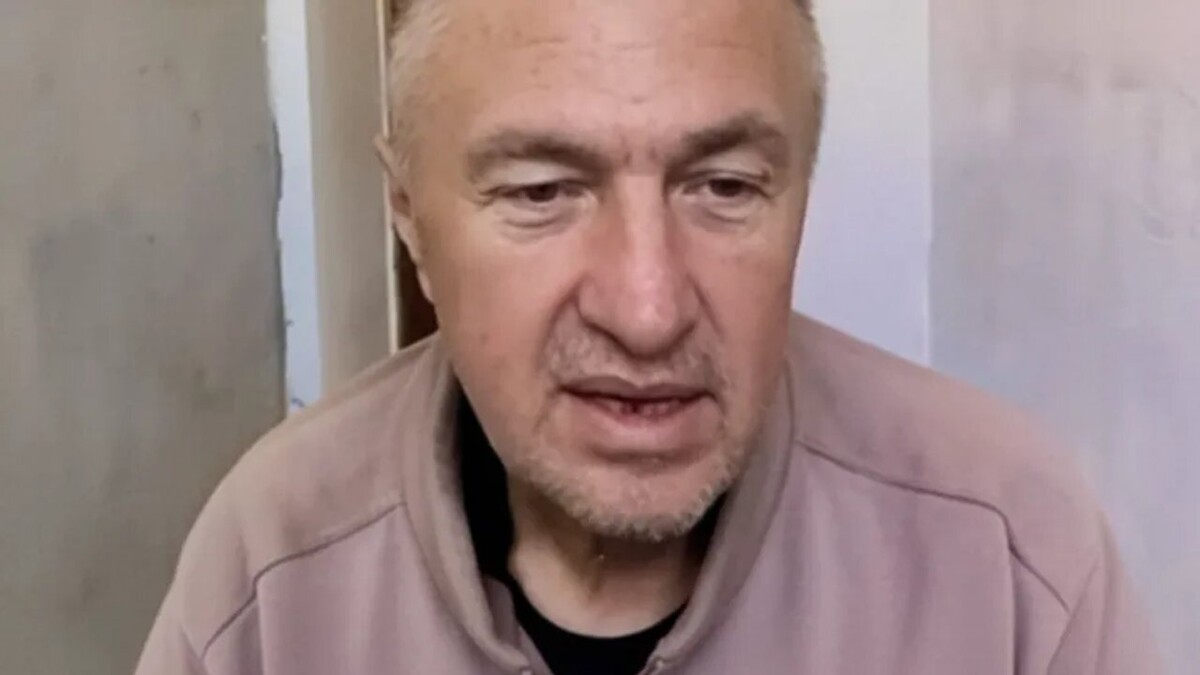
Buenos Aires, March 2 (NA) -- The case known as the "Russian sect of Bariloche", in which Konstantin Rudnev is being investigated for human trafficking, has entered a decisive phase regarding his health status and the manner of serving his preventive detention. According to information gathered by the Argentine News Agency, the file has been sent for review to the Federal Chamber of General Roca, while the Public Prosecutor's Office has requested the intervention of the Forensic Medical Corps of the Supreme Court to evaluate whether Rudnev's house arrest is appropriate due to his health condition. The core of the argument revolves exclusively on whether his incarceration is compatible with the accused's clinical condition. The debate was sparked after the January 21 hearing, when Judge Gustavo Zapata decided to lift the preventive detention and grant house arrest with electronic monitoring, with the aim of allowing for a broader medical evaluation. That decision was appealed by the prosecution at the same time, and later the Review Court revoked the house arrest and ordered the continuation of detention in Unit 6 of the Federal Penitentiary Service, in Rawson. Faced with this scenario, the defense filed a cassation appeal, which led to the judicial file being sent to the Federal Chamber of General Roca. At the center of the debate is Article 32 of the Penitentiary Enforcement Law, which enables alternative detention methods when remaining in a penal institution prevents adequate medical treatment. During the January hearing, defense physicians pointed to the need to deepen diagnostic studies and even evaluate the possibility of hospitalization, based on Rudnev's marked weight loss and pre-existing pathologies. The Federal Penitentiary Service and DATIP indicated that there was no imminent risk to life, although it was considered advisable to advance with complementary studies. Given the very different opinions and the defense's insistence on the seriousness of the condition, the prosecution requested the intervention of the Forensic Medical Corps to unify technical criteria and determine if the case fits the legal assumptions that allow for mitigation. The prosecution's request aims for the forensic body to interview Konstantin Rudnev, analyze existing medical reports, and establish what studies must be carried out. According to the accusation, this report would provide the court with an objective and uniform parameter to resolve the health-related precautionary measure. Rudnev questioned that medical studies requested by his own professionals in the City of Buenos Aires had not been authorized, and expressed reservations about the intervention of the Forensic Medical Corps. However, he clarifies with his defense that he is not refusing to undergo medical checks, and that the disagreement centers on the institutional framework where they should be carried out, the guarantees of independence, and the presence of interpreters to avoid language barriers. While the appeals are being processed and it is defined whether there will be a forensic medical report, Rudnev remains detained in Unit 6 of the SPF in Rawson. The upcoming resolutions of the Chamber and the eventual technical report will be decisive in determining whether Konstantin Rudnev's preventive detention must continue in the Rawson prison or if house arrest is warranted for health reasons.